



```html
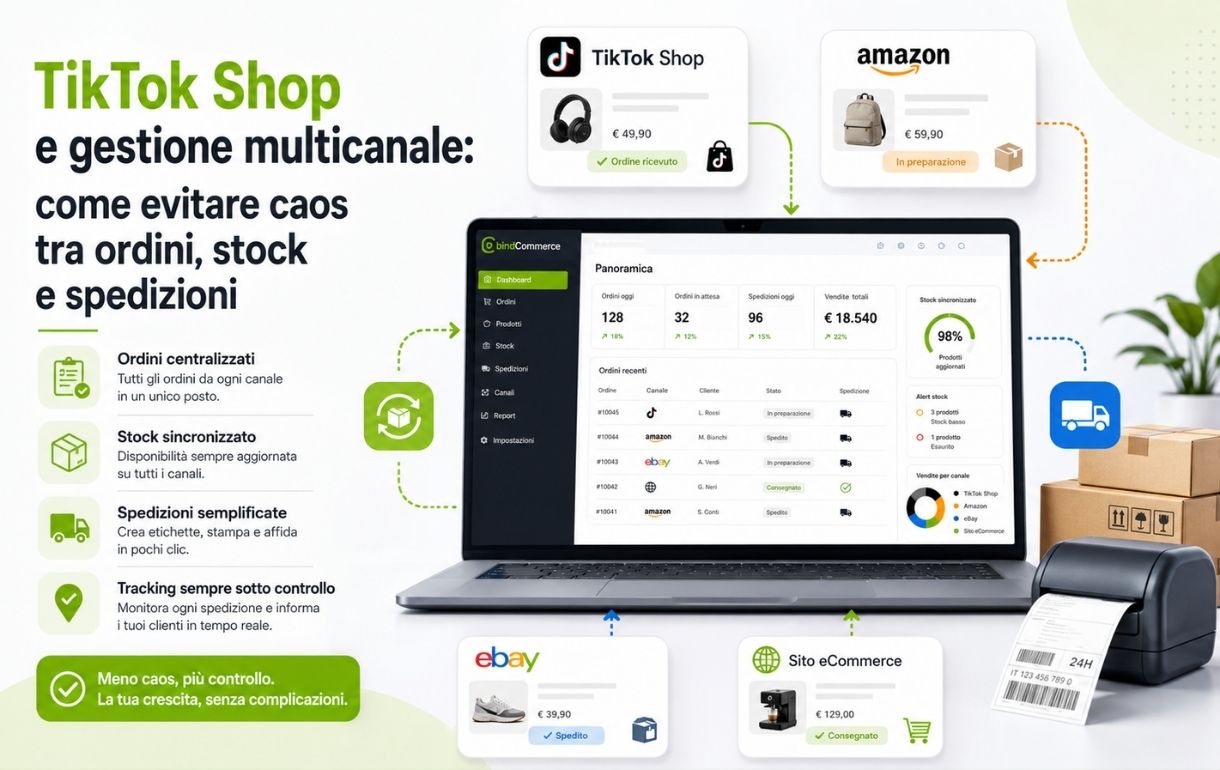
TikTok Shop represents a new opportunity for many eCommerce companies. It allows businesses to reach customers in a context that is different from traditional marketplaces, where product discovery can start from a video, a live stream or creator content.
But every new sales channel also brings new operational complexity.
Opening TikTok Shop does not simply mean publishing products on a new platform. It means managing a new flow of orders, updating availability, organising shipments, communicating tracking information, handling possible returns and keeping all company systems aligned.
For a company that already sells across multiple channels, the risk is clear: turning a new commercial opportunity into a new source of operational disorder.
The problem of unsynchronised stock
One of the most delicate aspects of multichannel selling is stock management.
When a company sells simultaneously through its eCommerce website, marketplaces, physical store, B2B channels and platforms such as TikTok Shop, product availability must be updated quickly and consistently.
If stock is not synchronised, each channel risks showing different availability.
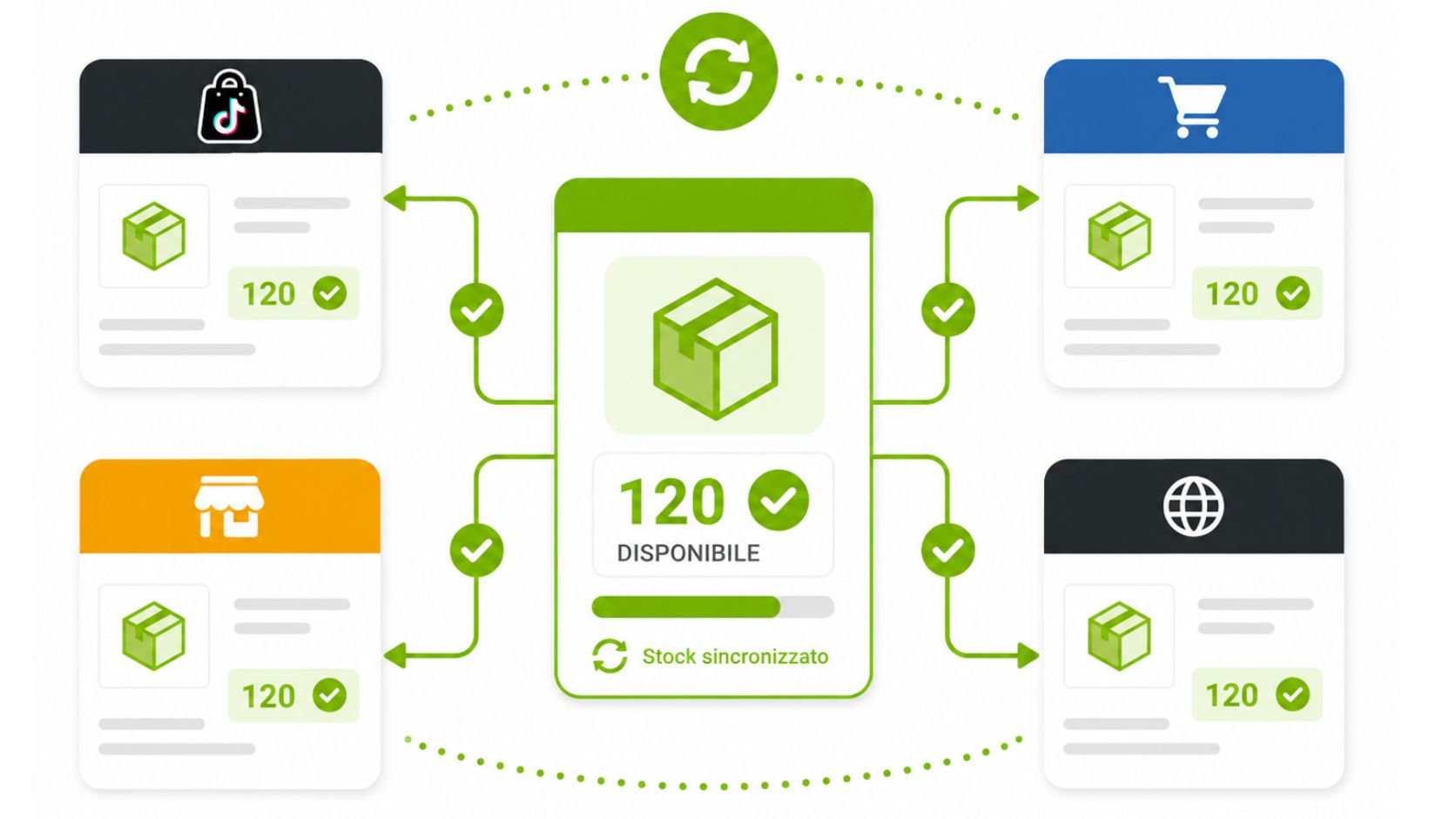
A product might appear available on TikTok Shop but have already been sold on Amazon. Or it might be purchased on the eCommerce website while still appearing available for order on other marketplaces.
This problem becomes even more evident when products have limited availability, high turnover or are sold during promotional campaigns.
In the case of TikTok Shop, this issue is particularly important because effective content can generate attention and orders very quickly. A video, a live stream or a collaboration with a creator can suddenly increase demand for a product.
If stock is not updated correctly, the company risks selling more units than are actually available.
The risk of selling unavailable products
Selling products that are not available is one of the most damaging errors in eCommerce management.
At first glance, it may seem like just an operational problem, but in reality it has much broader consequences.
When a customer buys a product that cannot be shipped, the company has to manage communications, refunds, replacements, delays and support requests. This creates wasted time, customer dissatisfaction and a possible loss of trust in the seller.
In a context such as TikTok Shop, where the purchase experience is often immediate and driven by the impulse generated by content, an availability issue can quickly damage brand perception.
The customer has seen the product, purchased it immediately and expects a fast, smooth experience. If the order is cancelled or delayed due to lack of stock, the experience becomes negative.
For this reason, stock synchronisation should not be considered a technical detail, but a fundamental part of a multichannel sales strategy.
Orders to be imported manually
Another frequent problem concerns order import.
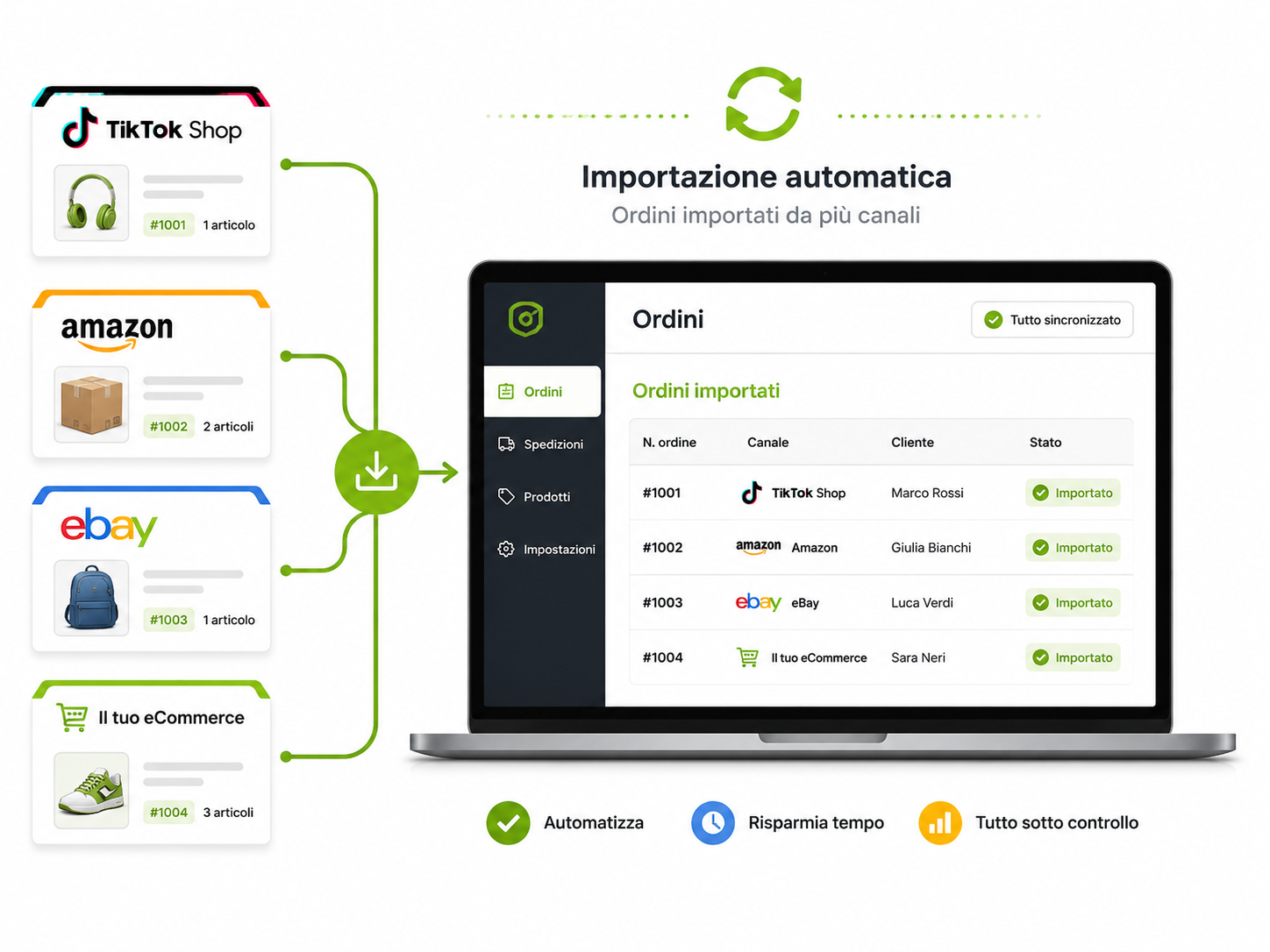
When a company starts selling on a new channel, it may initially be tempted to manage orders manually: logging into the platform, downloading the data, copying it into the management system, preparing it for the warehouse, creating the shipment and updating the status.
This approach may work for a few orders, but it quickly becomes unsustainable when volumes increase or when there are many channels to manage.
Manual order import involves several risks:
- typing errors;
- delays in fulfilment;
- forgotten orders;
- incomplete customer data;
- difficult coordination with the warehouse;
- lack of a centralised view.
The problem is not limited to TikTok Shop. It affects any company that manages multiple channels without an integrated system.
Complexity increases when orders have to be sent to an ERP, a management system, a WMS, an external warehouse or a courier.
In these cases, automating order import becomes essential to avoid duplication and reduce manual work.
Tracking and shipments to be updated
After the order has been imported, the shipping phase begins.
Here too, manual management can create many problems.
Each order must be prepared, handed over to the courier, associated with a tracking number and updated on the sales channel. If the company sells on multiple marketplaces, each platform may have different rules, timescales and formats for communicating order status.
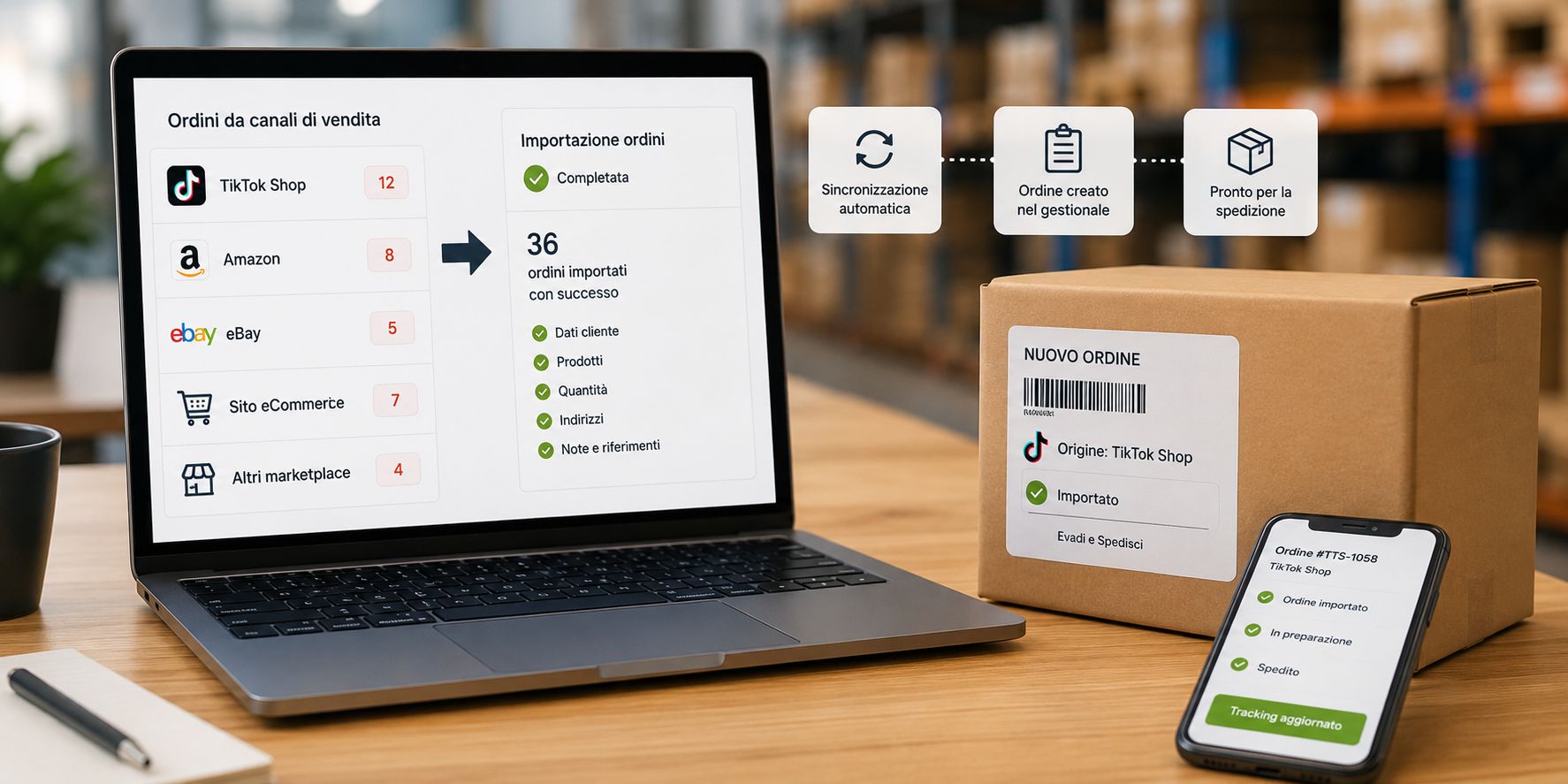
Tracking is not just a technical detail. It is an important part of the customer experience.
An online customer expects to know when the product has been shipped, which courier will deliver it and where the parcel is located.
“Where is my order?”
“When will it be delivered?”
“Has it already been shipped?”
“Can you send me the tracking code?”
If tracking is not updated correctly, customer service requests increase. These requests create additional work and reduce the team’s efficiency.
For this reason, in multichannel management it is important that shipping information is updated automatically on sales channels, avoiding manual intervention every time an order is fulfilled.
Returns and customer support
Multichannel management does not end with shipping.
After delivery, return requests, replacements, refunds, complaints or product questions may arrive.
Here too, each channel may have different procedures. Some marketplaces have very specific rules on response times, refund methods and dispute management.
TikTok Shop, like any sales channel, must therefore be included in an orderly customer support flow.
The problem arises when information is scattered:
- the order is on one channel;
- the shipment is on another system;
- the warehouse uses a separate management system;
- customer support does not have full visibility;
- the return does not correctly update stock.
In this scenario, even a simple request can become complex to manage.
A well-organised flow makes it possible to quickly know:
- where the order originated;
- when it was shipped;
- which tracking information was communicated;
- whether the product was delivered;
- whether a return was requested;
- whether stock needs to be updated.
The quality of customer support depends heavily on the quality of the available data.
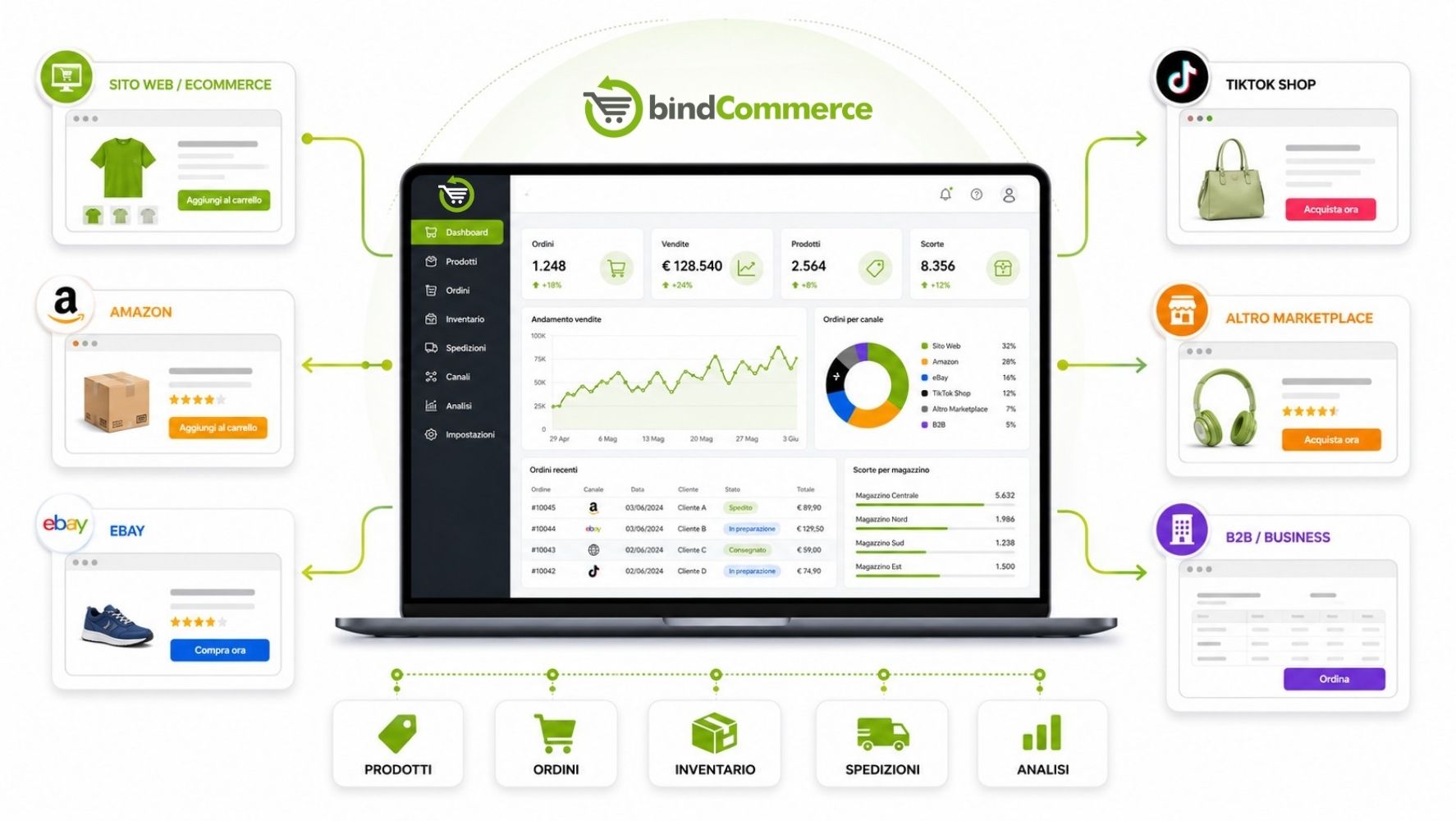
Why centralising workflows matters
Multichannel selling only works if channels are not managed as separate islands.
Every new marketplace or social commerce platform should become part of an organised ecosystem, where products, orders, stock, shipments and updates move in a coordinated way.
Centralising workflows means creating a single control point between the different company systems.
This makes it possible to:
- manage the catalogue in a more organised way;
- publish products on multiple channels;
- update prices and availability;
- import orders automatically;
- send orders to the management system or warehouse;
- update tracking and order statuses;
- reduce manual errors;
- improve operational visibility;
- scale more easily to new channels.
The advantage is not only technical. It is also strategic.
A company that centralises workflows can open new channels with greater control, without having to rebuild different manual processes every time.
TikTok Shop can therefore be managed not as an isolated experiment, but as part of a broader eCommerce strategy.
How bindCommerce can support operational management
bindCommerce helps companies centralise and automate multichannel eCommerce workflows, connecting sales channels, marketplaces, management systems, warehouses, couriers and business systems.
The goal is to reduce manual work, limit errors, keep products, orders, availability and shipments aligned, and make it easier to open new channels such as TikTok Shop.
For a company that wants to sell on multiple platforms, the difference is not only being present on new channels, but being able to manage them in an organised, scalable and sustainable way.
Contact us to assess your multichannel management```
Thank you for rating this article.